

Key Takeaways
- Legal advice helps protect your rights and clarify your obligations, while financial guidance optimizes your wealth and helps you achieve your future goals.
- Understanding the distinction can save time, money, and prevent costly mistakes in personal or business decisions.
- A collaborative approach, integrating both types of expertise, often yields the most comprehensive solutions for complex situations.
Table of Contents
- Defining Legal Advice
- Understanding Financial Expert Guidance
- Key Differences Between Legal and Financial Advice
- When to Seek Legal Advice
- When to Seek Financial Expert Guidance
- Collaborative Approach: Integrating Legal and Financial Advice
- Final Thoughts
Defining Legal Advice
Legal advice is specialized guidance offered by a licensed attorney, designed to help individuals or businesses understand their rights, obligations, and available remedies under the law. This kind of advice is customized to your specific circumstances and is protected by attorney-client privilege, meaning confidential communication stays between you and your lawyer. For instance, if you are dealing with a business contract, property dispute, or setting up a trust, obtaining legal advice ensures you follow relevant statutes and safeguard your interests. For financial matters, combining legal advice with insights from a banking expert can provide a fuller understanding of complex transactions and potential risks.
Legal professionals undergo extensive training and are regulated by state bars, ensuring that the guidance they provide is not only accurate but also ethically sound. Many scenarios—such as litigation, compliance concerns, or estate planning—require legal input to mitigate risks and ensure that your decisions align with the law. If you are unsure whether your actions could have legal consequences, it is crucial to consult with an attorney rather than relying on informal counsel or online sources.
Understanding Financial Expert Guidance
Financial expert guidance is centered on helping individuals or organizations achieve their financial goals with strategies tailored to their unique financial situation. Certified professionals—such as financial planners, investment consultants, and wealth managers—offer guidance on building diversified portfolios, planning for retirement, minimizing tax burdens, and maximizing savings. Their insights are especially valuable when making decisions about investments, loans, or major purchases.
The expertise of a financial advisor is rooted in economic analysis and current market trends rather than the specific application of legal statutes. These experts may offer advice on budgeting, risk management, or other areas, such as insurance, but they do not perform legal functions or interpret laws. It is essential to distinguish between financial planning, which focuses on wealth growth and protection, and legal strategy, which ensures compliance and lawful conduct.
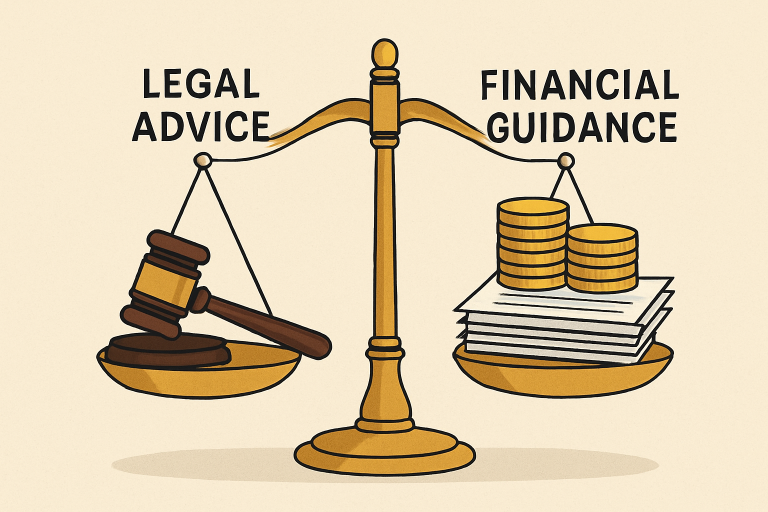
Key Differences Between Legal and Financial Advice
- Scope of Expertise: Legal advisors focus on aspects such as contracts, disputes, employment law, and regulatory compliance, while financial experts dedicate their skills to investments, asset management, and forward-looking planning.
- Regulatory Framework: Attorneys are subject to state bar regulations and ethical rules. Financial planners may be registered with agencies such as the Securities and Exchange Commission (SEC) or Financial Industry Regulatory Authority (FINRA) and are required to offer guidance in their clients’ best interests.
- Confidentiality: Conversations with your attorney are protected by attorney-client privilege, ensuring a higher standard of confidentiality than what typically applies to financial advisors, although the latter also maintain client privacy by industry standards.
Confusing the two disciplines can have serious consequences. For instance, substituting a financial planner’s advice for legal matters—such as contract negotiations or estate provisions—can result in invalid documents or unintended financial risks.
When to Seek Legal Advice
Legal guidance is crucial whenever you are confronted with events that could have a lasting impact on your rights or obligations. Typical scenarios where legal advice is essential include:
- Drafting or reviewing legal documents, such as wills, trusts, or contracts
- Engagement in lawsuits or formal disputes
- Understanding compliance requirements for businesses or property laws
- Responding to regulatory investigations or accusations
When to Seek Financial Expert Guidance
Financial experts help you make sense of your financial situation and plan for future milestones. Consult a financial advisor if you need help with:
- Investment selection and portfolio diversification
- Retirement goal-setting, savings plans, and pension management
- Tax optimization and budgeting strategies
- Analyzing loan terms, real estate investment, or insurance coverage
Collaborative Approach: Integrating Legal and Financial Advice
Many key life events—such as starting a business, planning an inheritance, or selling property—require both sound legal and financial planning. An integrated or collaborative approach ensures you won’t miss important details that could impact your wealth or legal standing. For example, legal counsel is needed to draft valid estate documents, but a financial advisor’s input can help you minimize taxes and structure accounts efficiently.
Why Collaboration Matters
By involving both a legal advisor and a financial planner, you can address all dimensions of a complex issue, thereby maximizing both compliance and financial benefits. This is particularly important in estate planning, mergers and acquisitions, and succession planning, where tax, investment, and legal implications intersect. A team approach can help you proactively identify solutions and avoid pitfalls that might otherwise go unnoticed.
Final Thoughts
Knowing when to seek legal expertise versus financial guidance is crucial to making informed decisions. Legal advisors protect your interests within the bounds of the law, while financial experts ensure your monetary goals are well planned and executed. By recognizing the respective roles and leveraging both as needed, you can navigate personal and professional milestones with confidence. Whether drafting legal documents or managing assets, a strategy that incorporates both types of guidance provides the most reliable path toward your objectives.